
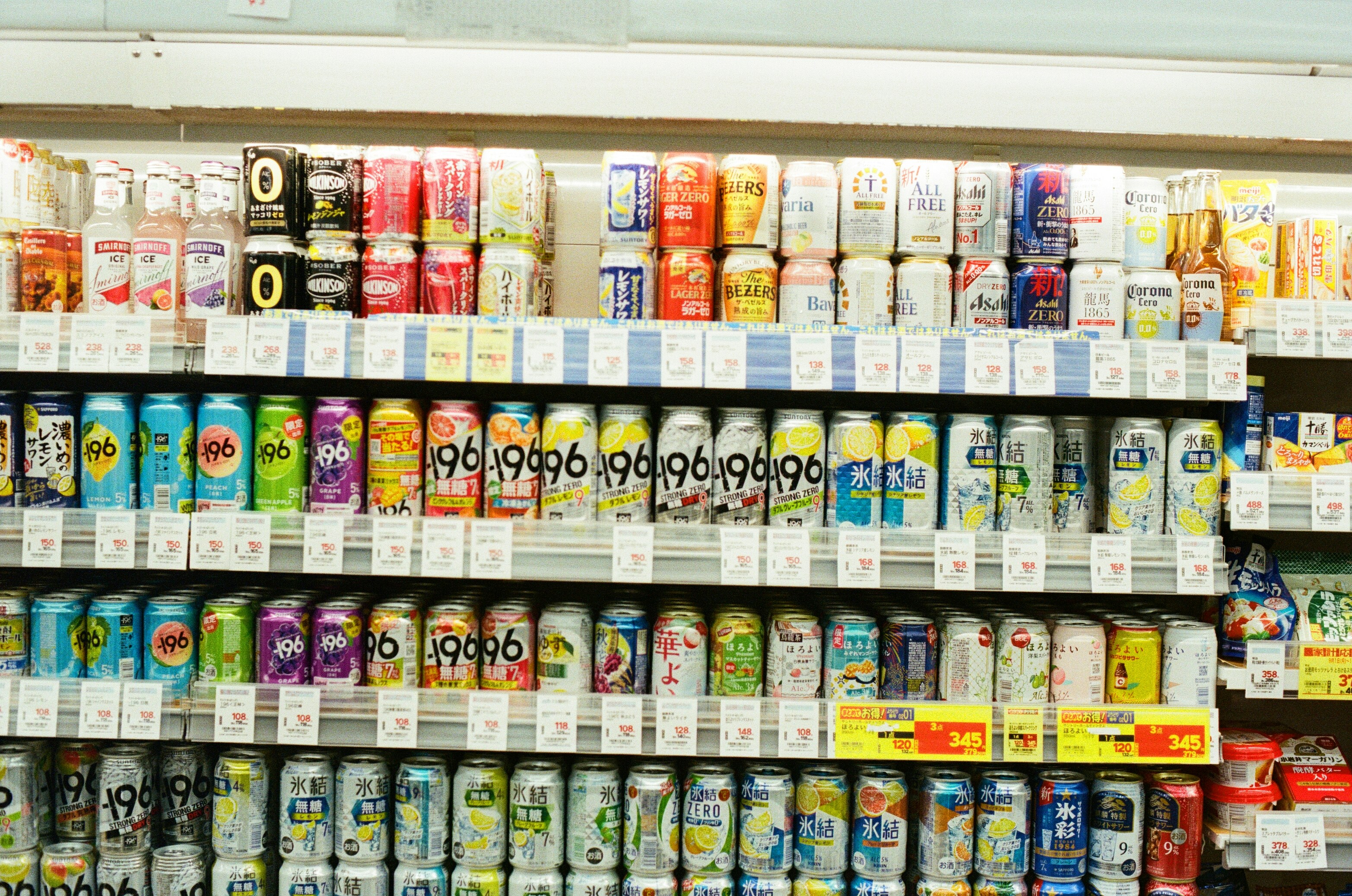
Retailers often sell multiple versions – or ‘brands’ – of the same product. A casual shopper may not be aware that in many cases these ‘different’ brands are jointly owned.
If you search online quotes for car insurance, there will be many more apparently distinct brands than there are independent suppliers being listed. On the high street, several different clothing stores are all part of the same Boohoo group. Heineken supplies about 200 different brands of beer (one of which, confusingly for us, is called ‘Brand’).
Consumer markets as diverse as pet food, premium ice cream, dating apps/services, trainers and cigarettes are full of distinct brands under common ownership.
In our study, we investigate some of the reasons why a firm might wish to supply multiple brands, potentially at different prices (Armstrong and Vickers, 2025). The modelling approach we take is to suppose that consumers differ in which brands they are prepared to consider, and that they will buy the cheapest brand from this set of ‘acceptable’ options.
For example, a pharmaceutical company might sell an original ‘branded’ drug alongside a ‘generic’ version of the same item. Some people will only consider the branded version, while others (including most doctors) will be equally willing to consider both options and will buy the cheaper, generic one. Likewise, some consumers will only want to drink Diet Coke, some only Classic Coke, while a third group might not care.
To study when a firm wishes to set different prices for its brands, we use a classical demand elasticity approach. If a cheaper brand has less elastic demand than a more expensive brand (demand for the cheaper option is relatively less responsive to changes in price), then the firm will wish to set the same price for these two brands. But if the cheaper brand is more elastic (demand varies more with changes in price), then the firm will wish to set different prices.
Whether a cheaper brand is more or less elastic than a more expensive brand depends on the size and demand elasticity of that indifferent group of consumers who wish to buy whichever brand is cheaper.
Using this approach, we discuss several scenarios: when a multibrand firm will set the same price for its two brands (this would be the case, for example, if both Diet Coke and Classic Coke went on sale at the same time in a supermarket); when one ‘discount’ brand always has a lower price than another premium brand; or when one brand has ‘everyday value’ (with an unchanging intermediate price) while another uses what’s known as ‘high-low’ pricing, with a high regular price alongside occasional deep discounts.
As well as studying these pricing patterns, we also investigate the incentives that a firm has to introduce a new brand, the impact of a potential government policy banning different prices being offered by a firm for the ‘same’ product, and the effects of mergers between firms.
In this last situation, we find that if two single-brand firms merge, the new two-brand firm might continue to compete against rivals with one of its brands, and only one brand has a significant price increase post-merger (a feature sometimes seen in real-world case studies).
Although multibranding is a frequent phenomenon in the real world, it has not been the focus of much research so far. Our study is an early attempt to understand the pros and cons of this practice, although there remains much scope for further work on the topic.